

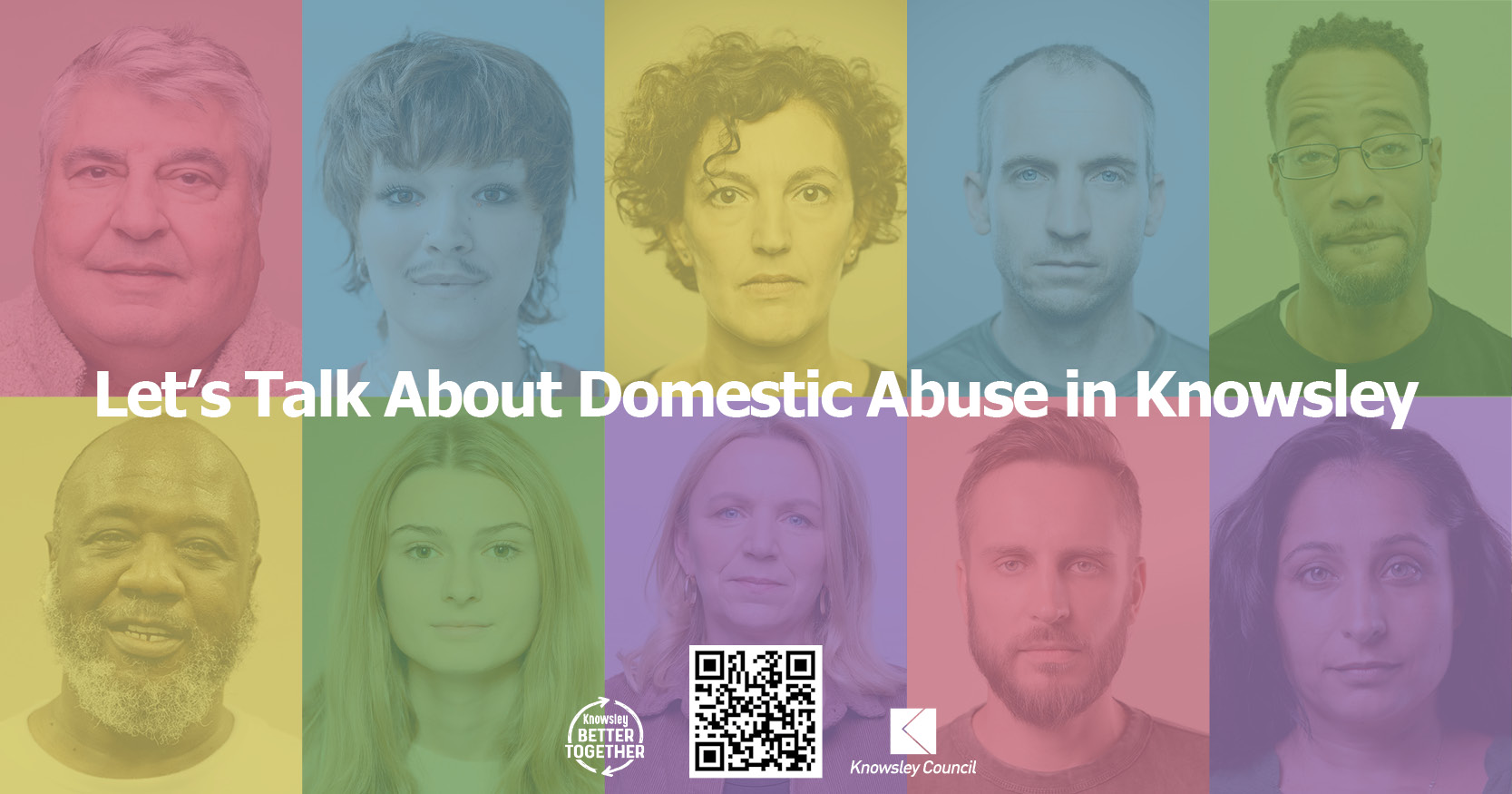
Knowsley Council is seeking to hear resident views, experiences, and perceptions of domestic abuse to help shape the council’s new Domestic Abuse Strategy.
Domestic abuse can affect anyone—no matter your age, gender, or background, it can happen between partners and in families.
It is so important that the council understands what the people across the borough think and feel about domestic abuse. There are no right or wrong answers, every opinion matters.
By taking part, residents can help the council, and its partners, to improve services and responses to domestic abuse across Knowsley.
This engagement will run from Tuesday 25 November 2025 until Saturday 28 February 2026.
You can complete this digital survey here Let’s Talk: About Domestic Abuse in Knowsley
Cllr Shelley Powell, Knowsley Council Cabinet Member for Communities and Neighbourhoods, said: “We are always working to improve our domestic abuse services and ensure that everyone in the borough can access the support they need, when they need it.
“As part of this work, we are currently developing a new Domestic Abuse Strategy which will influence our work moving forward and we are asking residents to help us shape it.
“Domestic abuse can impact anyone – no matter your age, gender, or background – and it can devastate families.
“We want to understand our residents’ thoughts, views, and perceptions around domestic abuse. Every answer is valued and can play an important role in the future strategy.
“I would urge everyone to take part.”
What is domestic abuse?
Domestic abuse is an incident or pattern of incidents of controlling, coercive (behaviour such as threats, humiliation and intimidation), threatening, or violent behaviour by a partner, ex-partner, family member or carer.
Are you, or someone you know, experiencing abuse? You are not alone and help and support is available.
Signs to look out for include, but aren’t limited to:
- They have less confidence or are quieter than usual.
- They seem afraid of their partner.
- They have stopped seeing their friends or family.
- They don’t have access to their own money / can’t use money without permission
- Their partner often criticises them, humiliates them, orders them around or makes all the decisions.
- Their partner repeatedly checks where they are.
Where to go for help:
If you, your child, or someone you know is at immediate risk of harm, you should contact the police urgently, call 999. If you are not at immediate risk but are concerned, please contact one of the services listed below:
Knowsley Council Safer Communities Service (Specialist Domestic Abuse Service)
Tel: 0151 443 2610
Enquiries.safercommunities@knowsley.gov.uk
Knowsley Multi-Agency Safeguarding Hub
Tel: 0151 443 2600
The First Step (Specialist Domestic Abuse Service)
Tel: 0151 548 3333
Website: www.thefirststep.org.uk
Savera UK
Helpline 0800 107 0726
www.saverauk.co.uk
Support is also available through:
- National Domestic violence Helpline 0808 2000 247
- Men’s Advice Line 0808 801 0327
- LGBT+ Domestic Abuse Helpline 0800 999 5428
- Women’s Aid – Live chat to Women’s Aid
Galop
Galop is the leading LGBT+ anti-violence and abuse charity, providing the National LGBT+ Domestic Abuse Helpline. They provide advice and support to individuals who have experienced hate crime, sexual violence, and domestic abuse and have an online referral form. They also offer a Trans Advocacy Service.
Website: www.galop.org.uk
Helpline: 0800 999 5428
Email: help@galop.org.uk
Worried about a friend?
If you are are worried that your partner or ex-partner has a previous history of abuse, or if you’re worried a friend, neighbour or family member is at risk of abuse, you/they have the right to know if they have an abusive past.
The right to know is commonly known as Claire’s Law, or more formally the Domestic Violence Disclosure Scheme (DVDS), as was formally rolled out in England and Wales in 2014 and is named after Clare Wood, who was murdered by her abusive ex-boyfriend in 2009.
Under Clare’s Law, you have the right to:
Apply for information about their current or ex-partner because they are worried, they may have a history of abuse and are a potential risk to them.
Request information about the current or ex-partner of a friend or relative because you’re worried, they might be at risk.
What happens when an application is made?
The police will assess if the person named in the application is a risk to their partner based on previous violence or abuse convictions. They will seek support from the Domestic Abuse Advocate/IDVA service if a domestic abuse professional is required for the visit. The survivor may need support following disclosure.
When might a DVDS not be needed?
When a full police disclosure has been obtained by children’s social care. The Social Worker can share basic details of risk, omitting any names. This will ensure that victims are aware that there is a domestic abuse history.
The GDPR and Data Protection Act 2018 do not prevent, or limit, the sharing of information for the purposes of keeping children and young people safe.
How to make a request
A Clare’s Law request can be made by calling 101, online or at a police station. Online requests can be made at: https://www.merseyside.police.uk/advice/advice-and-information/daa/domestic-abuse
For further information visit www.clares-law.com